Skip to content


Table of Contents
Brown spots and facial redness rarely respond to skincare alone, which is why many patients look into laser options after months of products that didn’t change much. The appointment itself is usually the part that feels unclear.
At SkinSplendid, we walk patients through the full arc of a session before scheduling anything. Here is the honest version of what to expect from laser skin treatments for pigment and visible redness, from the first consultation through the weeks that follow.
What is a laser session for brown spots and facial redness actually like?
A laser session for pigment and redness typically takes 20 to 45 minutes and feels like brief snaps of heat against the skin. Most patients leave with mild warmth and redness that settles within a day, followed by one to two weeks of gradual clearing.
What Laser Treatment Actually Targets in Pigment and Redness
Laser and light devices target color in the skin. Melanin absorbs the energy in brown spots and patches, while hemoglobin absorbs it in the small dilated vessels that create visible flushing. The device heats the target, the body clears the damaged material, and the surrounding skin is left largely intact.
The appointment structure stays the same across concerns, but the device and settings shift. At our studios, we use IPL and OptiLight® by Lumenis for pigmentation correction and vascular lesion treatment, Aerolase® for gentler sessions and inflammatory redness, and LaseMD Ultra by Lutronic for resurfacing and pigment work. Pigment and redness are often addressed in the same plan because years of sun exposure tend to produce both at once.
How Your Consultation Decides the Plan
Your provider first assesses Fitzpatrick skin type, a clinical scale from I to VI that predicts how skin responds to light energy. That assessment drives device selection more than any other factor, since deeper skin tones require different wavelengths and more conservative settings to reduce the risk of unwanted pigment change.
The concerns themselves also behave differently. Melasma is hormonally influenced and can rebound with aggressive heat. Sun spots usually respond well. Post-acne marks fade on their own timeline. Persistent flushing sits in the vessels rather than the pigment.
Your provider will also review photosensitizing medications, recent sun exposure, active breakouts, and any history of cold sores, since laser energy can trigger an outbreak in patients who are prone to them. A small test patch is sometimes performed before a full session.
How to Prepare in the Two Weeks Before
Preparation is short but worth following closely.
- Stop retinoids, exfoliating acids, and benzoyl peroxide roughly five to seven days ahead, or as your provider directs
- Avoid deliberate sun exposure and all self-tanner for two weeks, since tanned skin changes how the laser reads pigment.
- Arrive with clean skin, no makeup, and no SPF applied that morning
Season plays a role too. Summer in the metro area means beach weekends, rooftop hours, and long commutes in bright sun, all of which make pigment harder to treat predictably. That is one reason laser skin treatments for Montclair, NJ patients scheduled between late fall and early spring often go more smoothly.
What Happens During the Appointment
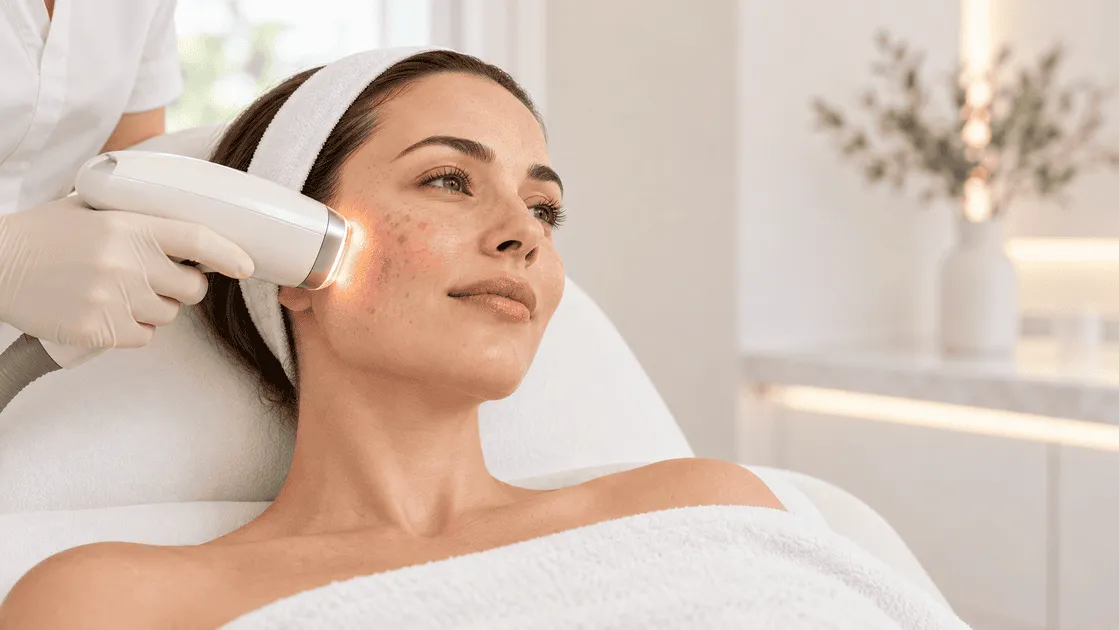
Your provider cleanses the skin, gives you protective eyewear, and applies cool gel or uses a cooling tip depending on the device. From there, the handpiece moves across the treatment area in overlapping passes.
Most patients describe the sensation as a quick snap of heat, similar to a rubber band flick, with a warm afterglow. Comfort varies by person and by area, and bony spots like the upper cheeks and nose tend to be more sensitive. Most patients tolerate the session well without numbing.
A face alone usually runs 20 to 30 minutes. Adding the neck and chest, which is common for sun damage, extends it closer to 45 minutes. Your provider checks the skin’s response between passes and adjusts settings as needed rather than running the same intensity start to finish.
What You Will See in the First 48 Hours
Expect redness and warmth that resemble a mild sunburn. For most patients, this settles within a few hours to a day, though it can linger slightly longer after more intensive sessions.
Pigment usually looks worse before it looks better. Treated spots darken and take on a texture some patients compare to coffee grounds, which is a normal sign that the pigment is being pushed toward the surface. Treated vessels may also appear briefly more visible before fading.
Call the office if you notice blistering, spreading swelling, weeping, or pain that increases rather than eases. Those are uncommon, and your provider would rather address them early.
How the Skin Clears Over the Following Weeks
Darkened pigment typically flakes or fades over roughly seven to fourteen days, though results vary with pigment depth, skin type, and the concern being treated. Redness reduction tends to happen more gradually, softening across several weeks rather than resolving in one visible step.
Most patients need a series of sessions spaced three to six weeks apart, with maintenance discussed afterward. A single treatment can produce noticeable change, but a plan built over several sessions generally gives more consistent results.
Aftercare That Protects Your Result
- Use broad-spectrum SPF 30 or higher every day; it is the single biggest factor in maintaining your pigment results.
- Keep skincare gentle: a mild cleanser and moisturizer only, with actives held until your provider clears you.
- Do not pick or scrub darkened areas, since forcing that shedding can cause marks that last longer than the original spot.
- Skip saunas, hot yoga, and intense workouts for the first day or two
Talk Through Your Skin Concerns With a Provider
Pigment and redness rarely trace back to a single cause, which is why we build the plan in person rather than from a photo. A consultation is where our team assesses your skin type, identifies what is actually driving the discoloration, and maps out which device and how many sessions make sense for you. When you are ready, Book Your Laser Consultation.